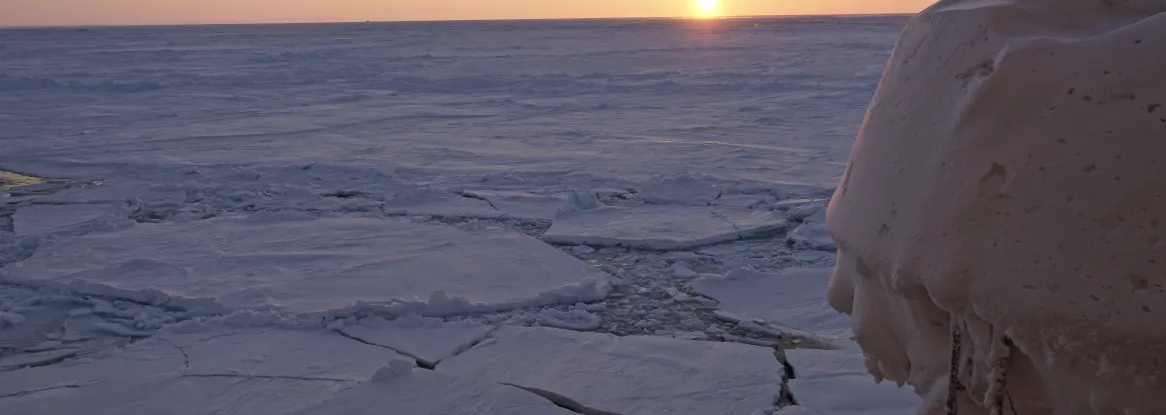
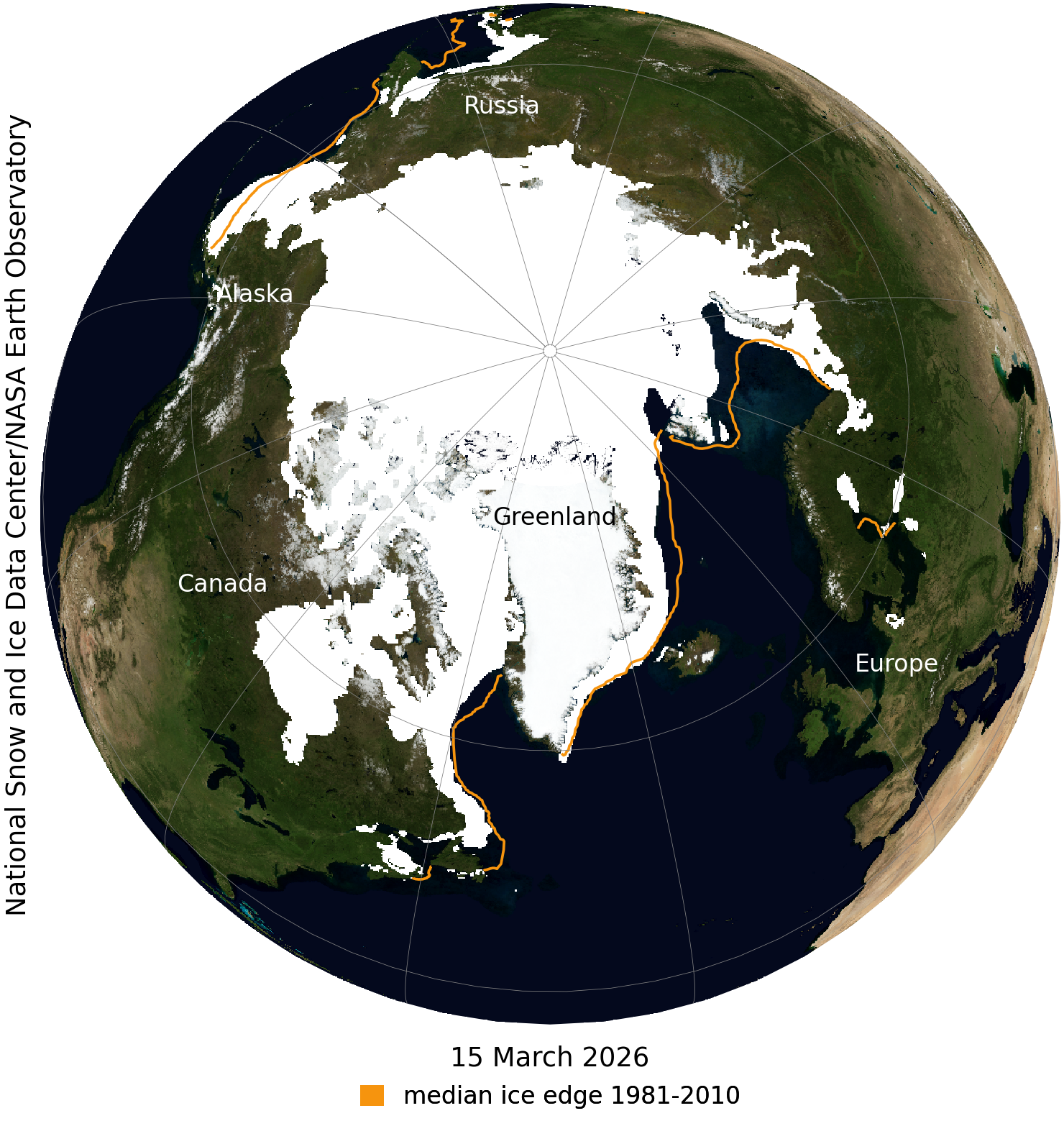
Arctic sea ice has likely reached its maximum extent for the year, at 14.29 million square kilometers (5.52 million square miles) on March 15, according to scientists at the National Snow and Ice Data Center (NSIDC) at the University of Colorado Boulder. The 2026 winter sea ice extent edged just below last year’s record of 14.31 million square kilometers (5.53 million square miles), statistically tying for the lowest maximum in the 48-year satellite record. Values within 40,000 square kilometers (15,000 square miles) are considered tied.
“This record low maximum gives a head start to the spring and summer melt season,” said NSIDC senior research scientist Walt Meier. “One or two record low years don’t necessarily mean much by themselves, but in the context of the significant downward trend that we've observed since 1979, it reinforces the dramatic change to Arctic sea ice throughout all seasons.”
This year's winter record low is 1.36 million square kilometers (525,000 square miles) below the 1981 to 2010 average, equivalent to about twice the size of Texas.
NSIDC scientists stress that the Arctic sea ice extent number is preliminary—weather conditions could change the annual maximum ice extent.
For more data and images, visit NSIDC’s Sea Ice Today.
See the NASA visualization and read the feature story.
NSIDC is part of the Cooperative Institute for Research in Environmental Sciences (CIRES) at the University of Colorado Boulder.