Our Research
As climate changes, how do Earth's frozen areas affect our planet and impact society?
Related News & Stories
Filter by:

Analysis - Sea Ice Today
On September 19, Arctic sea ice likely reached its annual minimum extent of 4.23 million square kilometers (1.63 million square miles). The 2023 minimum is sixth lowest in the nearly 45-year satellite record.
News Release
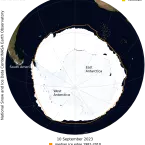
Antarctic sea ice has likely reached its maximum extent for the year, at 16.96 million square kilometers (6.55 million square miles) on September 10, according to scientists at the National Snow and Ice Data Center (NSIDC) at the University of Colorado Boulder. The 2023 maximum is the lowest in the 45-year satellite record.
News Release
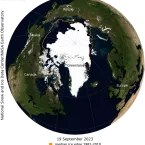
Arctic sea ice has likely reached its minimum extent for the year, at 4.23 million square kilometers (1.63 million square miles) on September 19, 2023, according to scientists at the National Snow and Ice Data Center (NSIDC) at the University of Colorado Boulder. The 2023 minimum is ranked sixth lowest in the nearly 45-year satellite record.
Analysis - Sea Ice Today
Both Arctic and Antarctic sea ice appear to be heading toward their respective seasonal limits, reaching the lowest extent at the end of summer in the north, and the highest extent as winter ends in the south.

Analysis - Sea Ice Today
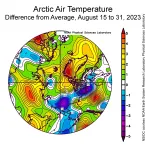
While the first half of August saw a rapid pace of Arctic sea ice loss, the pace slowed during the latter half of the month as mostly cooler conditions set in.

Analysis - Ice Sheets Today
A strong weather pattern from August 21 to 24 caused widespread melting across Greenland. This unusually late summer melt event was caused by a high and low air pressure configuration known as an omega pattern because of its jet stream shape.